FAQ
What is ForkMind?
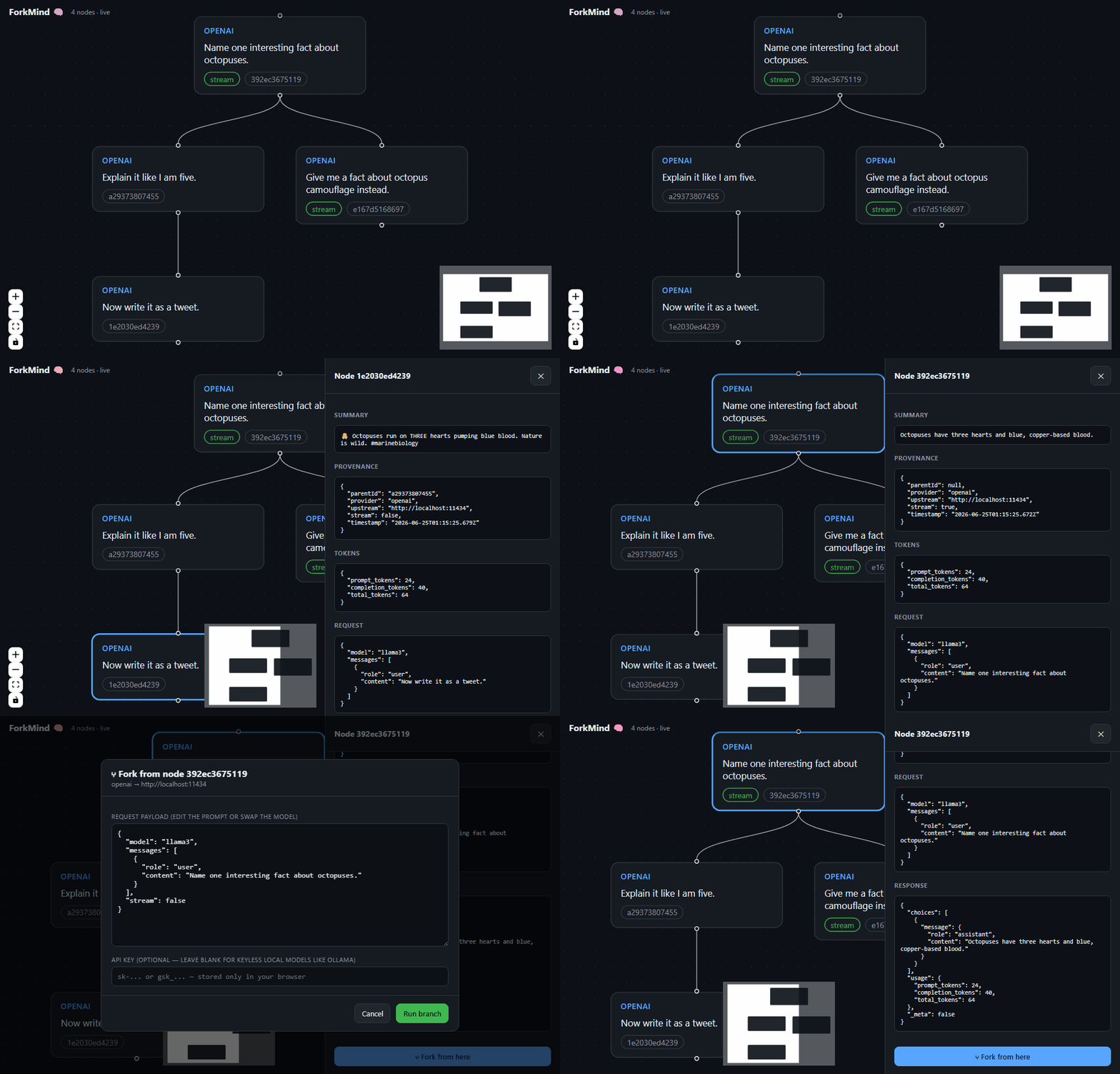
ForkMind is a local-first tool that treats AI context windows like a Git repository. It captures every LLM call into a local .forkmind directory, visualizes the conversation as a Directed Acyclic Graph (DAG), and lets you branch alternative prompts or models from any historical turn — all on your machine, no cloud, no account.
Is ForkMind free?
Yes. ForkMind is MIT-licensed and runs entirely on your machine. It defaults to free, open-source models via Ollama — no API key, no database, no telemetry.
Which LLM providers does ForkMind support?
ForkMind is a provider-agnostic proxy. It works with any OpenAI-compatible API, including Ollama, OpenAI, Anthropic, Groq, OpenRouter, Together, LM Studio, and vLLM.
How do I install ForkMind?
ForkMind runs straight from its git link — no npm registry needed. Run npx github:medhovarsh/forkmind start to launch the proxy and dashboard on port 4500, then point your OpenAI client at http://localhost:4500/v1.
How can AI agents use ForkMind?
ForkMind exposes an MCP (Model Context Protocol) server with tools for history (recent turns, lineage, branches, search) and context capsules (save, digest, restore, forget, replica health). An agent can recall previous attempts mid-task, self-correct, archive finished context to shrink its window, and restore it later.
What are ForkMind context capsules?
Capsules save conversation context as an immutable, encrypted DAG snapshot on disk so it can be removed from the live model window instead of truncated and lost. Segments are content-addressed (hashed over content + parents, like Git) — immutable and acyclic by construction. AES-256-GCM encryption with keys stored outside the data directory. Restore in full or one segment at a time. The workflow is save → verify on disk → compact: nothing is dropped until it is provably persisted.
How does ForkMind delete context securely?
Crypto-shredding: forgetting a capsule destroys its encryption key first, tombstones the id so identical content can never resurrect it, then removes ciphertext everywhere — including replicas. Backups of the ciphertext stay unreadable because the key is gone.
What is RAID in ForkMind?
Redundant Array of Independent DAGs. Mirror capsules to extra filesystem targets (second disk, synced folder, network mount). Replicas hold ciphertext + manifests only — keys are never replicated. On primary loss or bit-rot, restore self-heals from the first replica that passes verification; tombstones propagate on sync.
Does ForkMind modify the LLM or its cache?
No. ForkMind operates entirely at the context-assembly layer — it changes what the client sends, never the provider, model weights, or KV cache. Offloading just means the provider receives a shorter message list plus a one-line capsule handle.